Rise of Deepfake Cybercrime in 2025
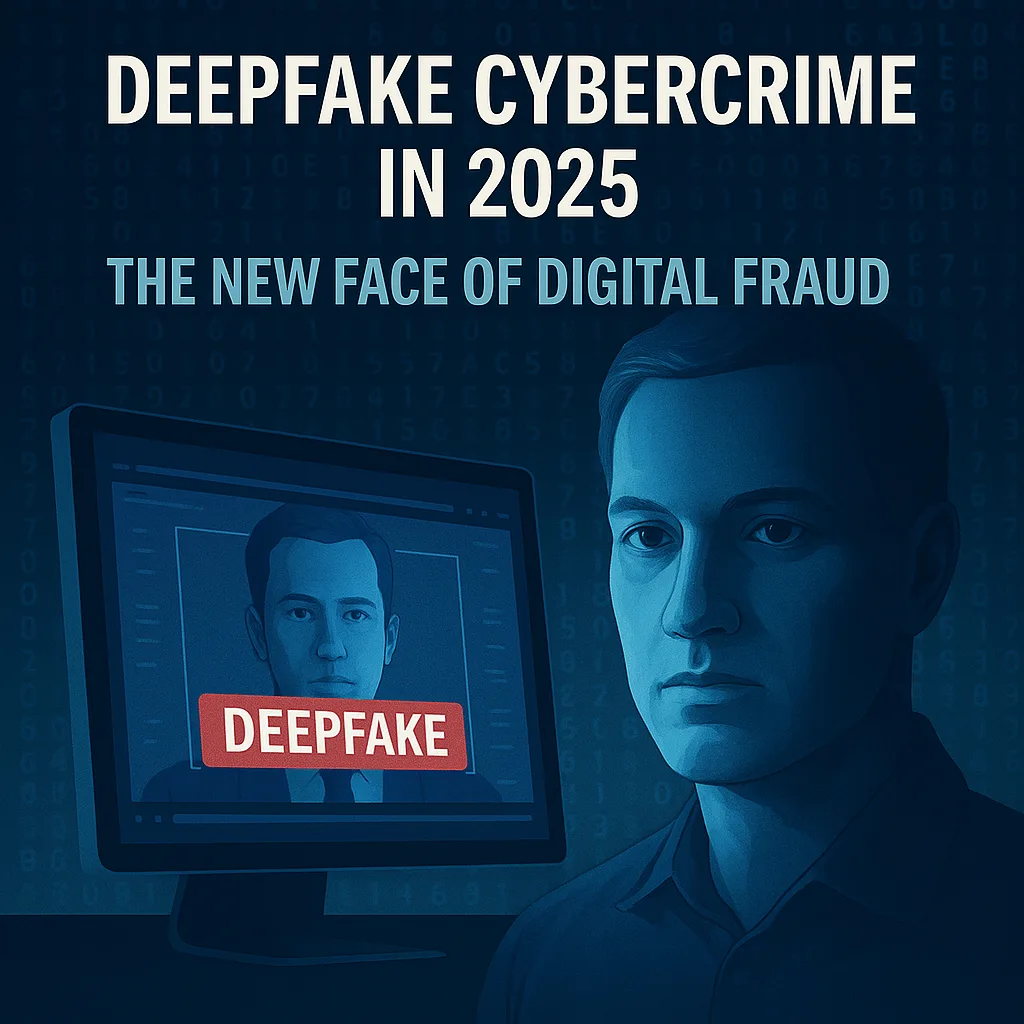
As the digital world is evolving on daily basis in 2025, deepfake cybercrime has also emerged as one of the most dangerous threats to individuals, companies, and governments. Deepfakes are AI-generated images, videos, or audio clips that look and sound real but are completely fake. Cybercriminals now use this technology to deceive, defraud, and damage reputations.
In this post, you’ll learn what deepfake cybercrime is, why it’s growing fast in 2025, and how you can protect yourself and your organization from it.
What Is Deepfake Cybercrime?
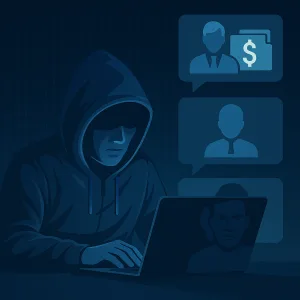
Deepfake cybercrime involves use of artificial intelligence (AI) to create fake; but convincing images, videos, or audio. These are then used to impersonate people and making them believe that these are real. In 2025, deepfake attacks have become more advanced and harder to detect.
Recent Example of Deepfake Cybercrime:
Recently in January 2025, a multinational company in Singapore has lost $25 million when a deepfake video call impersonated its Chief Financial Officer (CFO). The fake CFO authorized a fraudulent money transfer which landed to the cybercriminals. The employees which were involved in the fake transfer said that the voice and face on the video call were apparently 100% real.
Common Uses of Deepfakes by Cybercriminals:
- Financial Fraud: Using fake voice of executives and/or faces to steal money.
- Identity Theft: Creating new fake identities for scams.
- Defamation: Publishing false videos or audios to ruin reputations.
For a deeper look at how AI powers deepfakes, check out our blog on AI and Deepfakes.
Why Deepfake Cybercrime is a Growing Threat in 2025
There are several factors that have made deepfake attacks more frequent and dangerous in 2025, which I am going to explain below:-
1. Easy Access to Tools
Creating deepfakes is no longer limited to experts. Now there are free and low cost tools available online. This easy access to this technology has made it easy for anyone to generate fake content.
2. Effective Social Engineering
Deepfakes are now used in scams where attackers impersonate CEOs or other high officials of the organization. Victims are tricked using AI generated deepfake images, videos or audio to transfer money or share sensitive confidential data.
3. Political Manipulation
Fake videos are spreading misinformation and damaging trust in public figures and state organs. Deepfakes are being used to swing voter opinions especially when elections are approaching.
Want to learn more about media manipulation? Read our post on How Cybercriminals Use Social Media.
How to Detect Deepfake Content
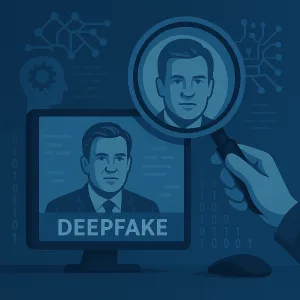
While deepfakes are more realistic than ever, and this technology is further improving, yet there are ways to identify them.
1. Look for Visual Clues
In case of deepfake video, so far it is easy. You can observe glitches like blinking issues, mismatched lighting, or blurry edges.
2. Analyze the Voice
Audios generated through AI may sound robotic or have unnatural pauses. Use your ear to detect anything odd in tone, pacing and pauses.
3. Use Detection Tools
Tools like Microsoft Video Authenticator, Sensity AI, or Deepware Scanner are available which can help to analyze media for signs of manipulation.
How to Protect Yourself and Business from Deepfake Cybercrime
Taking simple and smart steps can help you to protect yourself and business against deepfake cybercrime:
- Update Employees Regarding Deepfake Cybercrime
You should regularly conduct awareness sessions to keep your team update on how deepfakes work and how to spot them.
- Verify Every Request
Before acting upon the financial or sensitive requests made on phone, always confirm through multiple channels. Never trust only on video or voice alone.
- Monitor Your Digital Presence
Always be vigilant and keep an eye on social media and other online platforms for fake content that are using your name, or your brand name.
- Invest in Security Tools
Use software that can scan for fake content and flag unusual behavior in communications.
Explore our post on Best Cybersecurity Practices in 2025 for more practical steps.
The Future of Deepfake Cybercrime
As mentioned above that deepfake cybercrimes have made it easier for cybercriminals to defraud people. Below I am going to explain that with rapid growth of deepfake technology what type of threats are eminent:-
– More Realistic
With the growing pace of this technology, deepfakes will become almost impossible to be detected with the naked eye. Even experts will struggle to verify authenticity and only specialized forensic software will be able to detect it.
– Strong Regulations
Governments are working on laws to punish the creation and use of malicious deepfakes. Fake news and its propagation is now being penalized.
– Smart Detection Tools
AI is a double edge weapon, on one side it will create deepfakes, and on other side it will be used to detect them. Advanced AI-powered solutions to identify and block fake content in real-time will be soon introduced in the market.
Read more in our article on The Role of AI in Cybersecurity.
Conclusion
Deepfake cybercrime in 2025 is no more a futuristic threat; it has already been utilized by cybercriminals, and is a growing threat. It will be used to carry out online frauds, disseminating misinformation and for identity theft. That is why I say that the risks are serious.
But by staying well aware of latest trends, verifying all communications, and using the right tools, you can reduce your vulnerability to these digital deceptions. The key is education, action, and constant vigilance.
Call to Action
If you want more tips to stay safe in a world of AI-powered threats, visit our weekly cybersecurity newsletter.
Share this article to help others understand and prevent deepfake cybercrimes in 2005.
Keywords
- deepfake cybercrime
- deepfake cybercrime in 2025
- AI-generated fraud
- deepfake detection tools
- synthetic media scams
- identity theft with AI
- cybersecurity threats 2025
- deepfake impersonation
- political misinformation AI
- real-time deepfake detection
- protect from deepfake attacks